
Scoville scale chart: every chilli we hold
Chilli heat is measured in Scoville heat units (SHU). On this chart it runs from 0 for a bell pepper to an average of 2,693,000 for Pepper X, which Guinness World Records names as the world's hottest (Atwal, 2023). The table below lists every chilli and item we have verified, with its published range, its heat band and a link to its sources.
Figures last checked: 11 October 2026.
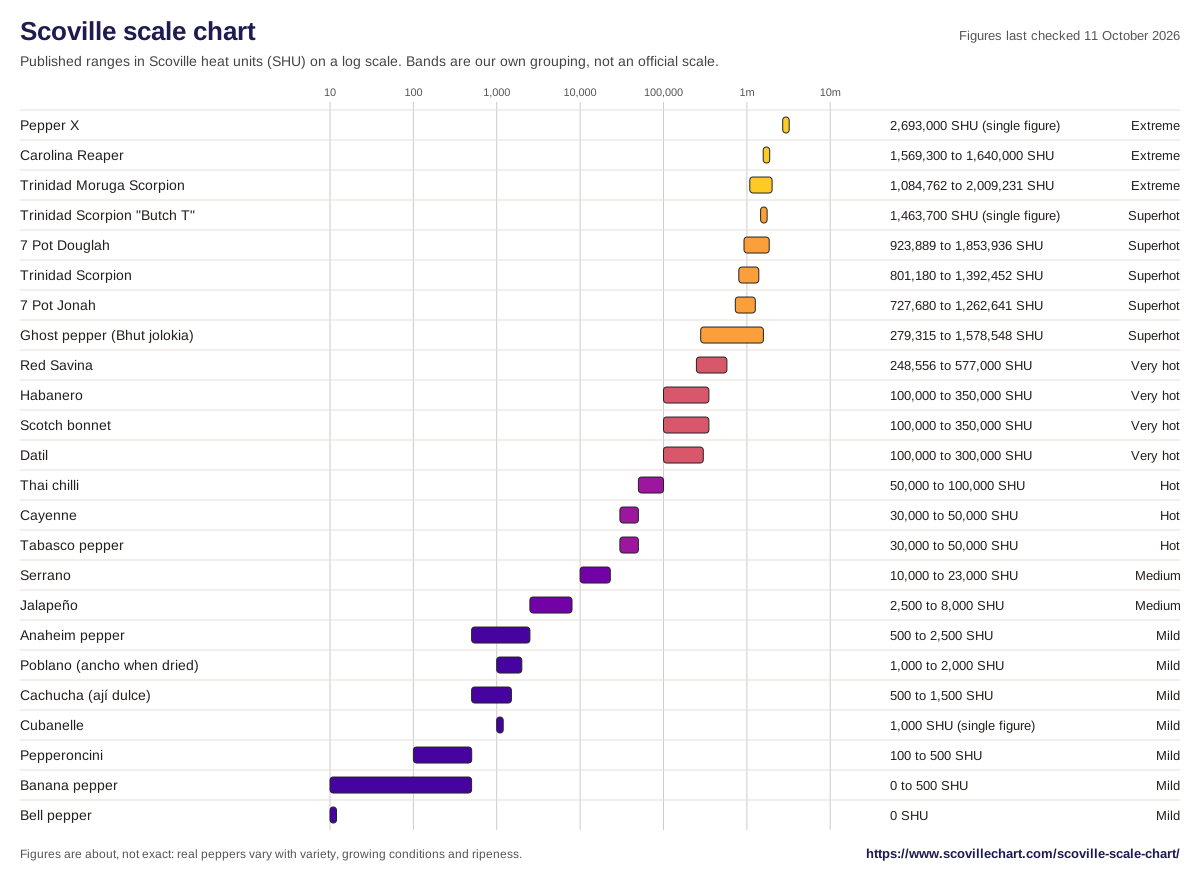
Every chilli, hottest first
| Name | Published range | Band | Note and sources |
|---|---|---|---|
| Pepper X | 2,693,000 SHU (single figure) | Extreme | The record figure is an average of specimens tested over four years. Sources |
| Carolina Reaper | 1,569,300 to 1,640,000 SHU | Extreme | Held the Guinness record from 2013 to 2023. Sources |
| Trinidad Moruga Scorpion | 1,084,762 to 2,009,231 SHU | Extreme | Range for single plants in one trial. Sources |
| Trinidad Scorpion "Butch T" | 1,463,700 SHU (single figure) | Superhot | The Guinness record holder in March 2011, before the Carolina Reaper. Sources |
| 7 Pot Douglah | 923,889 to 1,853,936 SHU | Superhot | Range for single plants in one trial. Sources |
| Trinidad Scorpion | 801,180 to 1,392,452 SHU | Superhot | Range for single plants in one trial. Sources |
| 7 Pot Jonah | 727,680 to 1,262,641 SHU | Superhot | Range for single plants in one trial. Sources |
| Ghost pepper (Bhut jolokia) | 279,315 to 1,578,548 SHU | Superhot | Certified as the world's hottest by Guinness in 2007. Sources |
| Red Savina | 248,556 to 577,000 SHU | Very hot | Long quoted at 577,000, but a 2005 trial measured far less. Sources |
| Habanero | 100,000 to 350,000 SHU | Very hot | Fruity, a step into very hot. Sources |
| Scotch bonnet | 100,000 to 350,000 SHU | Very hot | Close to the habanero in heat, common in Caribbean cooking. Sources |
| Datil | 100,000 to 300,000 SHU | Very hot | Grown mainly in northeast Florida. Sources |
| Thai chilli | 50,000 to 100,000 SHU | Hot | Small and sharp. Sources |
| Cayenne | 30,000 to 50,000 SHU | Hot | Often sold dried and ground. Sources |
| Tabasco pepper | 30,000 to 50,000 SHU | Hot | The pepper, not the sauce. Sources differ. Sources |
| Serrano | 10,000 to 23,000 SHU | Medium | Thin-walled and crisp. Our own blend of two sources. Sources |
| Jalapeño | 2,500 to 8,000 SHU | Medium | A common benchmark for medium heat. Sources |
| Anaheim pepper | 500 to 2,500 SHU | Mild | Mild and widely grown. Sources |
| Poblano (ancho when dried) | 1,000 to 2,000 SHU | Mild | Called ancho once dried. Sources |
| Cachucha (ají dulce) | 500 to 1,500 SHU | Mild | Native to the Caribbean and similar in looks to a habanero, but mild. Sources |
| Cubanelle | 1,000 SHU (single figure) | Mild | A sweet frying pepper used a lot in Cuban, Puerto Rican and Dominican cooking. Sources |
| Pepperoncini | 100 to 500 SHU | Mild | Mild pickling pepper. Sources |
| Banana pepper | 0 to 500 SHU | Mild | Mild, often pickled. Sources |
| Bell pepper | 0 SHU | Mild | Has no capsaicin, so it scores zero. Sources |
Sauces and other items that are not chillies
These are on the chart to show the top of the scale. Pepper spray and pure capsaicin are not food and must never be eaten.
| Name | Published range | Band | Note and sources |
|---|---|---|---|
| Pure capsaicin | 16,000,000 SHU (single figure) | Extreme | The compound itself. Not a food. A calculated figure. Sources |
| Pepper spray (for use on people) | 200,000 to 5,000,000 SHU | Extreme | Not a food. Shown for scale only. Not a reliable measure for a finished spray. Sources |
| Tabasco original red sauce | 2,500 to 5,000 SHU | Medium | The sauce, for comparison. Sources |
How to read the table
- Ranges, not exact values. Heat varies with the variety, the growing conditions and the individual pod. We give the range the sources publish, and "single figure" where a source gives only one.
- Bands are our own grouping. The Scoville scale has no official named levels. Our bands are Mild, Medium, Hot, Very hot, Superhot and Extreme, and an item sits in the band that holds the middle of its range. See the band limits.
- Every figure has a source. The Sources link on each row goes to where our heat figures come from, which shows each source and any place where good sources disagree.
- The list grows. We add a chilli only after we have found and read a published source for its heat. The table, the image and the interactive chart on the home page all update together.
To see how many times hotter one chilli is than another, use the compare tool. To see what a Scoville number means in practice, see the dilution page.
References
- Atwal, S. (2023) 'Pepper X dethrones Carolina Reaper as world's hottest chilli pepper', Guinness World Records, 16 October. Available at: https://www.guinnessworldrecords.com/news/2023/10/pepper-x-dethrones-carolina-reaper-as-worlds-hottest-chilli-pepper-759706 (Accessed: 11 October 2026).